If you have ever stood in a hotel room and thought why does this feel so much better than my bedroom at home the answer is almost always dark walls.
Not black. Not cave-dark. But that deep, deliberate, warm kind of dark that makes a room feel like it was designed for you specifically. The kind of room you actually want to spend time in, not just sleep in.
That is what a dark moody bedroom does. And in 2026, this is without question the most searched bedroom aesthetic on the internet for good reason.
Here is everything you need to know to pull it off properly.
Why Dark Bedrooms Feel So Luxurious
Most people live with white or beige walls their entire lives, not because they love them, but because they are afraid of going darker. The fear is always the same: it will feel small, it will feel heavy, it will feel like a mistake.
Here is the truth. Dark walls do not make a room feel smaller. They make the room feel intentional. When the walls recede into shadow, you stop noticing the exact size of the space. What you notice instead is the texture of the velvet headboard, the warm glow of a brass sconce, the weight of the linen duvet. The room stops being a box you sleep in and starts being a retreat you disappear into.
This is exactly why luxury hotels have used dark interiors for decades. They understood early that darkness, done right, signals care and quality far more than white walls ever could.
The Elements of a Dark Moody Luxury Bedroom
1. The Right Paint Color This Is Where Everything Starts
The single biggest mistake people make when attempting a dark bedroom is choosing the wrong shade. Too cool and the room looks grey and flat. Too blue and it reads like a teenager’s bedroom. Too black and it feels airless.
The shades that actually work in 2026 are the ones with warmth built into them.
The best options by designer consensus:
Iron Ore by Sherwin-Williams is one of the most popular choices among interior designers right now. It sits at the edge of charcoal and black, with a soft warm undertone that stops it from reading as harsh. It works beautifully on all four walls and photographs exceptionally well, which matters if you ever want to share your space.
Wrought Iron by Benjamin Moore is the slightly lighter alternative for anyone who wants the same dark depth with a touch more flexibility. It has a subtle charcoal undertone that makes it feel sophisticated in any light condition morning sun or late evening lamp glow.
Hague Blue by Farrow and Ball is the choice if you want dark with a sense of richness rather than pure drama. The deep navy leans slightly green, which gives it a historic, layered quality that pure charcoal cannot match. Pair it with warm brass hardware and the combination is genuinely stunning.
The finish matters just as much as the color. Use matte or flat finish on the walls it absorbs light and creates that soft, velvety depth. Reserve satin or eggshell for trim only. A glossy dark wall reads as cheap even when the color is beautiful.
2. The Velvet Headboard The Room’s Crown
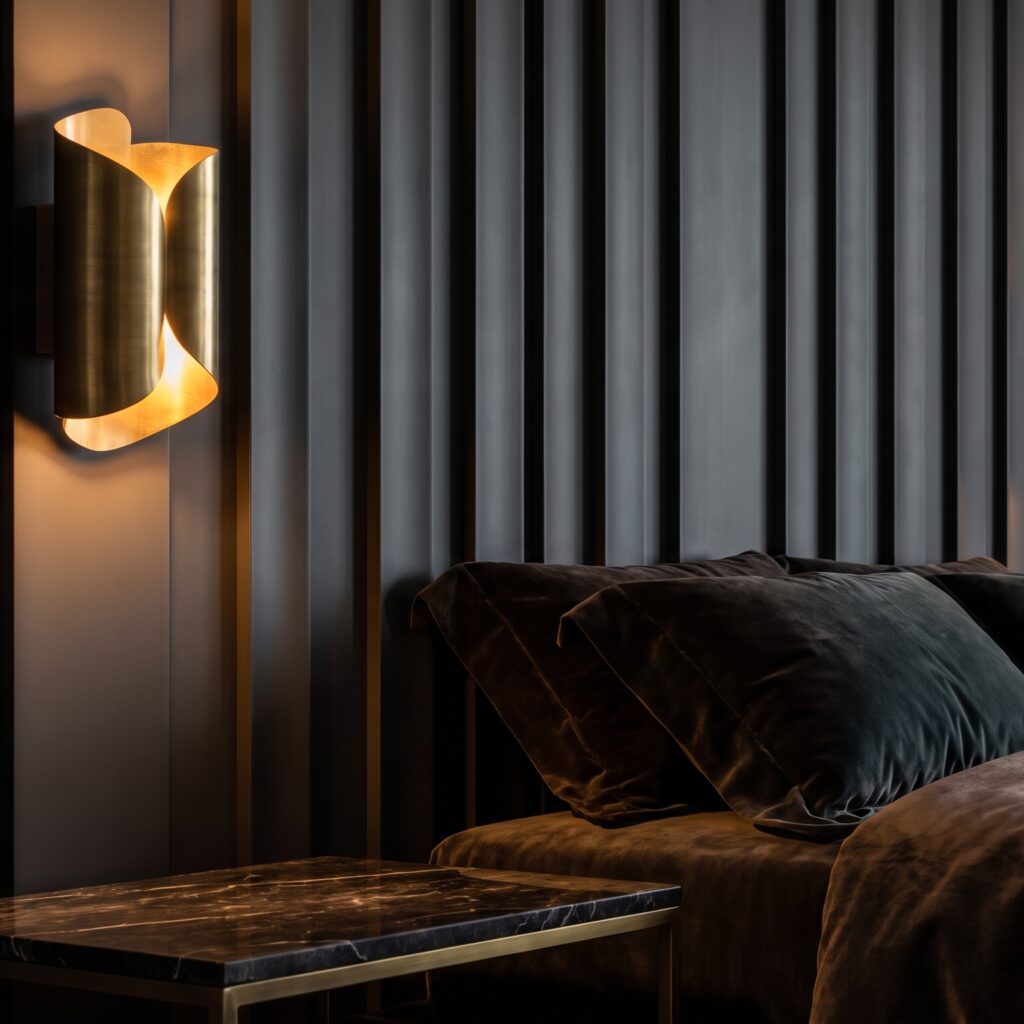
If there is one piece of furniture that defines a dark moody bedroom, it is the headboard. Not a wooden one. Not fabric in a neutral beige. Velvet, in a deep shade charcoal, deep forest green, dark plum, or navy.
An oversized velvet headboard does two things at once. It adds a visual anchor so dramatic and beautiful that the rest of the room can stay relatively simple. And it brings a tactile richness that you genuinely feel every time you walk into the room not just see.
The size matters. In a dark bedroom, a headboard that is too small disappears into the wall behind it. Go floor-to-ceiling or at minimum a full 60 inches tall. The headboard should feel like architecture, not furniture.
Channel tufting those clean vertical lines running up the headboard is the specific detail that elevates this from nice to genuinely designer. It catches light in a way that flat fabric does not, creating subtle dimension even against a dark wall.
3. Layered Lighting The Trick Every Designer Knows
This is the part most people skip, and it is exactly why their dark bedrooms fail.
A single overhead light in a dark bedroom is a disaster. It creates flat, harsh shadows and makes the room feel gloomy rather than atmospheric. The goal is the opposite warm light coming from multiple low sources, creating layers of glow that make the textures and materials in the room come alive.
The lighting formula that works:
Brass wall sconces on each side of the headboard. These should be your primary light source for the bedroom. Warm bulbs 2700K color temperature, never cool white positioned at eye level when you are sitting up in bed. The warm amber glow against a dark wall creates that hotel-suite atmosphere that feels impossible to replicate with overhead lighting.
Hidden LED strip lights behind the headboard. This is the detail that makes the room feel like it was professionally designed. A strip of warm white LEDs tucked behind the headboard throws a soft glow onto the wall behind it, creating depth and a gentle halo effect. It costs almost nothing and looks extraordinary.
One statement floor lamp in the corner. An arched brass floor lamp in the corner of the room serves two purposes it fills a dead corner with warmth and creates a reading spot that makes the room feel intentional and complete.
Bedside table lamps. Small, warm, simple. They do not need to be statement pieces the sconces do that job. These are for function and for filling in the ambient glow when the sconces alone are not enough.
4. Brass vs Bronze Which Metal Actually Looks Luxury
This is a question that comes up constantly, and the answer depends on the specific direction you are taking the room.
Brushed brass is the standard choice for dark moody bedrooms in 2026. It is warm without being too yellow, matte enough to feel contemporary rather than dated, and it photographs beautifully against dark walls. This is the metal you see in every editorial dark bedroom right now for good reason it just works.
Aged bronze is the choice if your room leans more toward traditional luxury. It has a deeper, almost brown warmth to it that pairs especially well with dark wood floors and deep jewel-toned textiles. It feels historic and collected rather than modern and designed.
Matte black is the choice if the room is going for an ultra-modern, almost futuristic edge. It creates a monochromatic look against dark walls that is striking and minimal, but it requires much more confidence in the other design choices to pull off successfully.
The rule: pick one metal and stay with it. Every sconce, every lamp base, every drawer pull, every mirror frame. Mixing metals in a dark room looks accidental rather than curated, and the whole atmosphere falls apart.
5. Textiles Where the Room Gets Its Warmth
Dark walls without layered textiles look cold and empty. The textiles are what make a dark bedroom feel warm and livable rather than just dramatic.
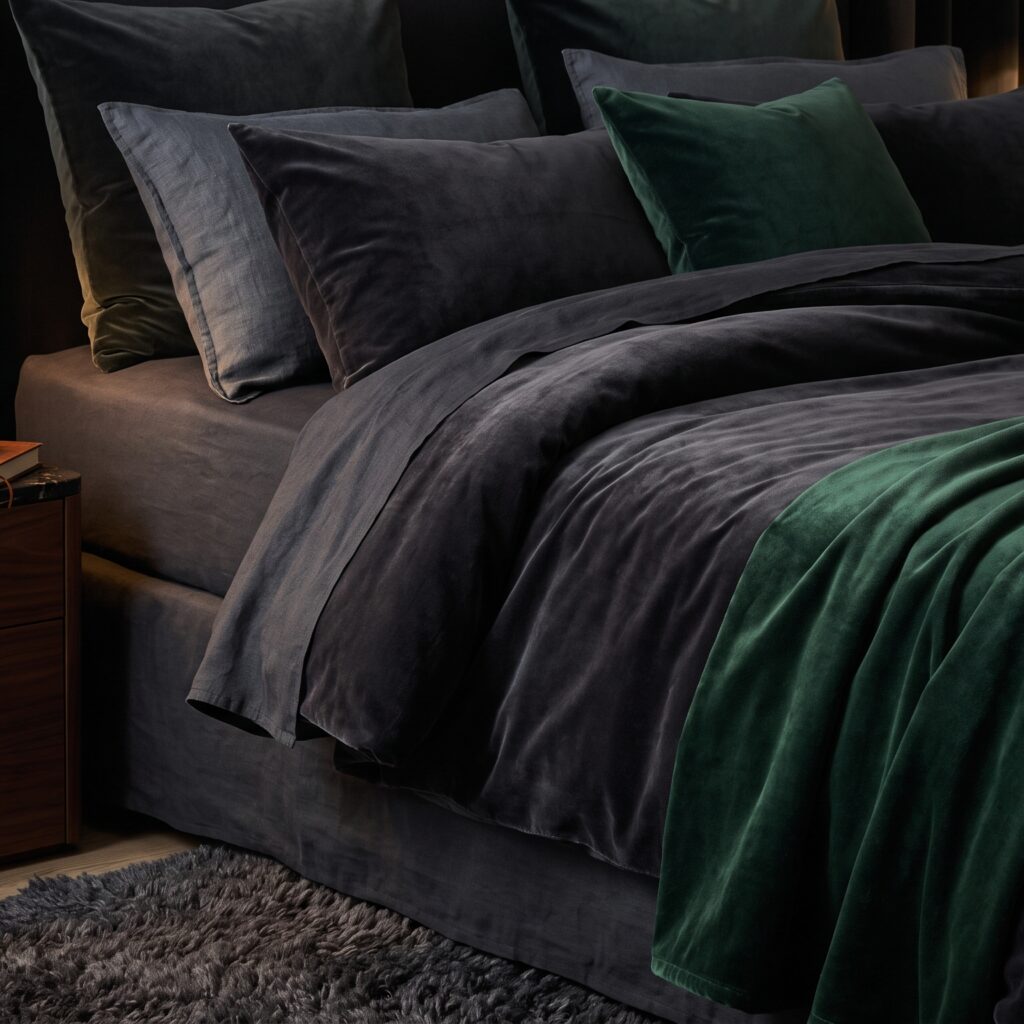
The bedding: Deep charcoal or near-black linen for the duvet matte, textured, substantial. Layer in one dark emerald green or deep burgundy velvet throw folded at the foot of the bed. Add four to six pillows mixing different textures velvet, linen, and one chunky knit in shades pulled from the room’s palette. The bed should look like you could disappear into it.
The curtains: Floor-to-ceiling, always. They should break at the floor or pool slightly never hover above it. Dark velvet or heavy linen in a deep shade emerald, charcoal, dark plum, or navy. The curtains should feel heavy and substantial, not sheer. They frame the room and add a significant amount of visual warmth.
The rug: A thick, high-pile charcoal rug under the bed, extending at least 24 inches on each side. The rug is what makes bare feet on a cold morning feel like a luxury experience. In a dark bedroom, a thin or flat rug reads as an afterthought. Go substantial.
6. The Dark Marble Nightstand The Detail That Pulls It Together
Nothing ties a dark moody bedroom together quite like the right nightstand. And in 2026, the nightstand that every designer is reaching for is dark marble specifically a deep grey or black marble with white or gold veining.
It brings in natural stone without the coldness of light marble. It catches the lamp light in a way that adds subtle glam without crossing into kitsch. And it is genuinely distinctive most people’s bedrooms have wooden or painted nightstands, which means a dark marble piece immediately signals that the room was designed with intention.
If full marble nightstands feel out of budget, look for nightstands with marble-topped surfaces and a dark walnut or matte black base. The effect is almost identical and the cost is a fraction of solid marble.
Full Budget Breakdown Three Ways to Do This
Not everyone has the same budget, and the beauty of this aesthetic is that it scales surprisingly well.
| Item | Budget ($400–600) | Mid-Range ($800–1200) | Luxury ($1500–2000+) |
|---|---|---|---|
| Paint | Sherwin-Williams Iron Ore | Farrow & Ball Hague Blue | Farrow & Ball + professional application |
| Headboard | Amazon channel tufted velvet | Wayfair oversized velvet | Custom upholstered, floor-to-ceiling |
| Sconces | Amazon brushed brass (pair) | CB2 or West Elm | Visual Comfort or designer fixtures |
| Bedding | H&M Home dark linen set | Parachute or Brooklinen | Frette or luxury linen |
| Curtains | IKEA ANNAKAJSA in dark | West Elm velvet drapes | Custom made velvet |
| Rug | Rugs USA charcoal high-pile | Loloi or Safavieh | RH or designer rug |
| Nightstands | Amazon marble-top pair | CB2 or Article | Restoration Hardware marble |
| LED strips | Amazon warm white | Govee or Philips Hue | Lutron smart system |
The honest truth: The budget version of this look is surprisingly close to the luxury version. The difference is mostly in material quality and longevity rather than in how the room looks in the first year. Paint and lighting make the largest impact regardless of budget prioritize those two if you need to choose.
The Three Mistakes That Ruin Dark Bedrooms
1. Cool light bulbs. This single mistake destroys more dark bedrooms than anything else. Cool white bulbs (4000K and above) drain the warmth from dark walls and make them look grey, flat, and slightly dirty. Use warm white only 2700K is the target. Every bulb in the room, without exception.
2. Not enough light sources. One overhead light in a dark room feels like a dungeon. Minimum four light sources sconces, floor lamp, table lamps, and LED strips. The room should glow from multiple directions.
3. Stopping at one dark wall. A single dark accent wall in an otherwise white room looks like an unfinished thought. Dark moody bedrooms work when the commitment is total all four walls, or at minimum three. The cocooning effect that makes this aesthetic so powerful only happens when the room fully envelops you.
The One Question Everyone Asks
Will it make my bedroom feel smaller?
No. It will make your bedroom feel deliberate. There is a significant difference between a room that feels small and a room that feels intimate. Dark walls shift a space from the first to the second and intimate is exactly what a bedroom should feel like.
The only time dark walls genuinely shrink a space is when the lighting is wrong. Fix the lighting and the room opens up not visually wider, but atmospherically warmer and more expansive in the way that actually matters when you are living in it.
Final Thoughts
A dark moody luxury bedroom is not about decoration. It is about atmosphere. It is about making a deliberate decision that your bedroom should feel like the most intentional room in your home not the most neutral one.
The charcoal walls, the velvet headboard, the warm brass light, the layered linen none of it is complicated. It just requires the courage to commit to something that most people talk themselves out of at the last minute, swap the dark paint for greige, and spend the next three years wondering why their bedroom never feels quite right.
Go dark. Do it properly. You will not regret it.
Browse more luxury home decor ideas and room-by-room guides at veloranests.com