There’s something about walking into a room that feels like a forest — dark, earthy, and completely wrapped in green — that makes your whole body exhale. That’s exactly what the dark green biophilic bedroom trend is doing in 2026, and honestly, it might be the most beautiful bedroom style I’ve ever seen.
If you’ve been scrolling Pinterest lately, you’ve probably stopped dead in your tracks at one of these images — a moody bedroom with deep olive green plaster walls, vines trailing down from glowing LED shelves, warm amber light casting everything in a golden haze, and the kind of chunky knit throw that makes you want to stay in bed forever. Welcome to the world of biophilic bedroom design.
This isn’t just an aesthetic trend. There’s real science behind why these spaces feel so good. Biophilic design — the idea of bringing nature into your built environment — has been shown to reduce stress, lower cortisol levels, and genuinely improve sleep quality. So this isn’t just a pretty room. It’s a room that takes care of you.
What Exactly Is a Biophilic Bedroom?
Before we get into the details, let me clear something up — because I’ve seen a lot of people confuse “biophilic bedroom” with just “a room with a few plants.” It’s so much more than that.
Biophilic design is about creating a deep, intentional connection to the natural world inside your home. It means choosing materials that feel organic — textured plaster walls, raw wood panels, linen and cotton fabrics — and layering in living elements like plants, vines, and botanical textures. The goal is that when you walk into the room, your nervous system reads it as “safe, natural, grounded.”
In a dark green biophilic bedroom specifically, you’re leaning into the moodier, more enveloping side of nature. Think less bright forest in spring, more quiet woodland at dusk. Deep olive greens, warm amber lighting instead of harsh white LEDs, heavy textures, and plants that spill and trail like they’re genuinely alive and growing.
🌱 The Core Elements of This Look
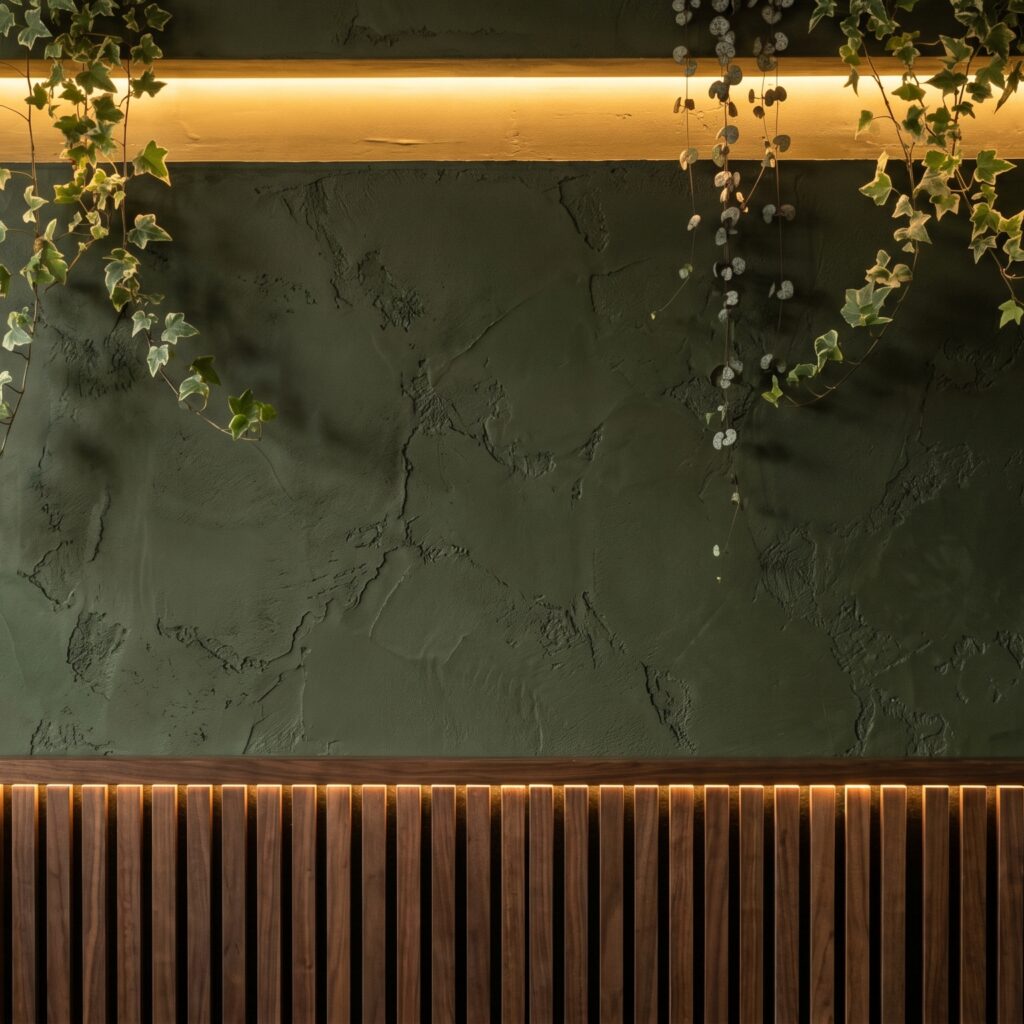
- Dark olive or forest green venetian plaster on the headboard wall — rough, textured, matte
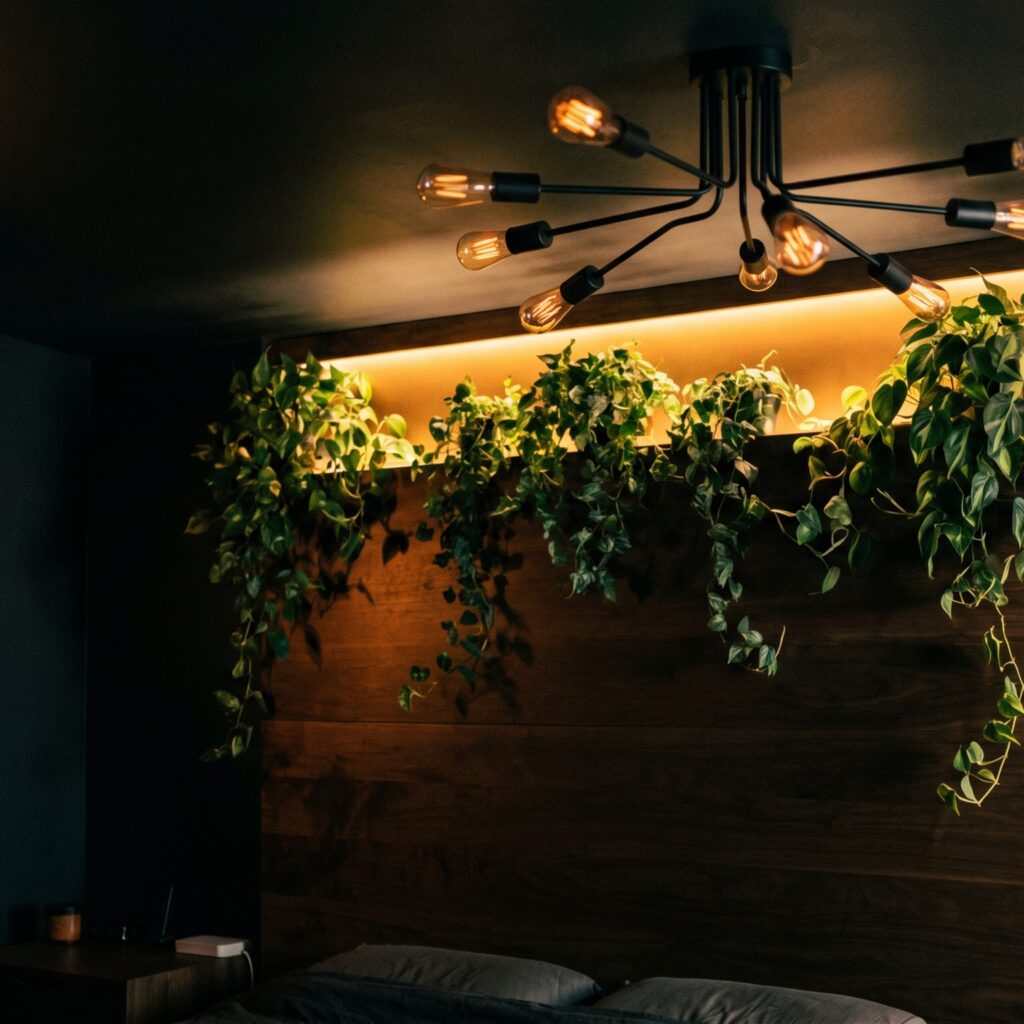
- Trailing and cascading plants — ivy, pothos, string of hearts spilling from shelves
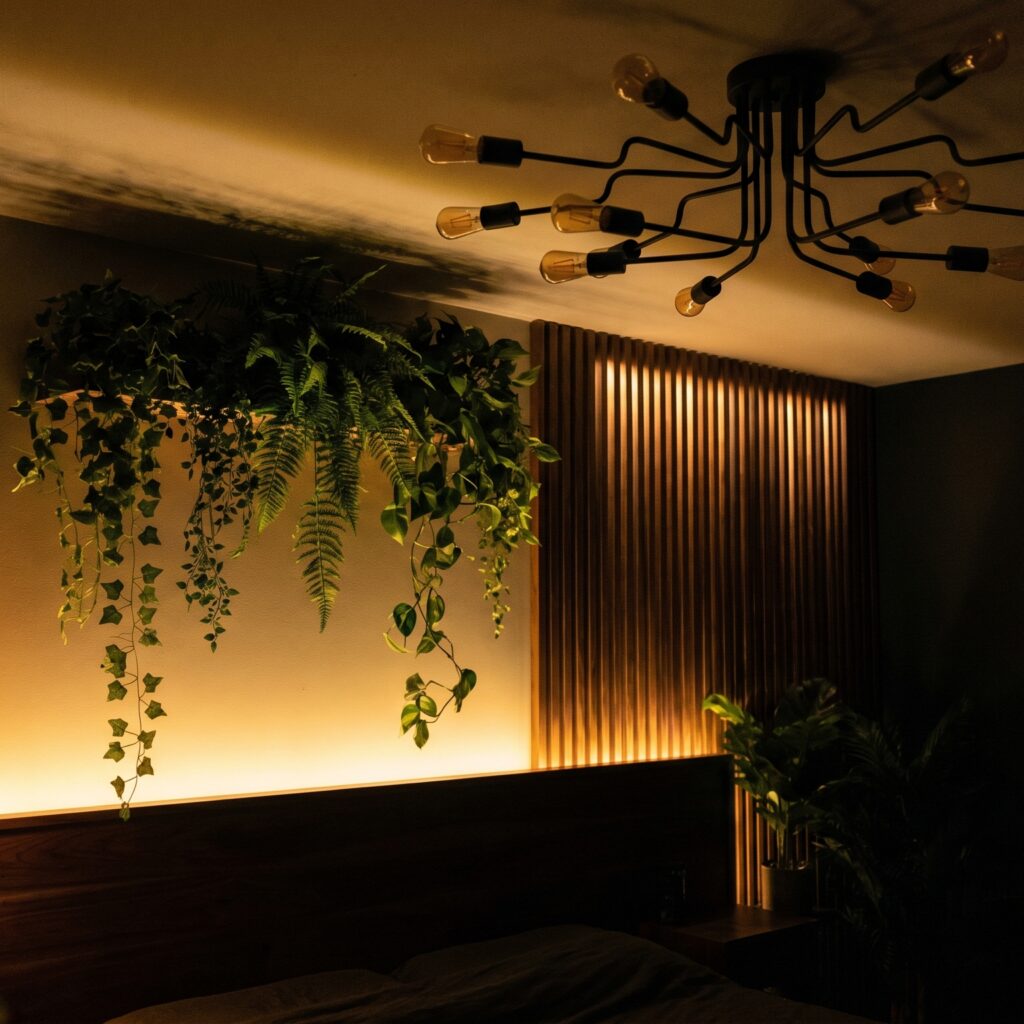
- Warm amber LED lighting — 2700K cove lights and Edison bulbs, never cold white
- Walnut fluted wood panels — warm wood grain as lower headboard section
- Black metal accents — sputnik ceiling light, industrial pendant, matte wardrobe panels
- Layered textiles — white linen bedding, chunky knit throw, velvet cushions
The Headboard Wall: Where the Magic Happens
If I had to pick one thing that makes or breaks this look, it’s the headboard wall. This is where everything comes together — and getting it right is the difference between a Pinterest-worthy bedroom and just a room painted dark green.
The wall treatment here is venetian plaster in dark forest olive green. Not paint — plaster. The texture matters enormously. Venetian plaster has depth and variation; light catches it differently from different angles, and the matte, slightly rough surface absorbs light in a way that feels very organic and earthy rather than flat or clinical.
Running horizontally across this wall, about two-thirds of the way up, is a recessed LED cove shelf. This serves two purposes — it holds your trailing plants and it casts that gorgeous warm amber glow upward and forward that gives the whole wall its moody, atmospheric quality. Below the plaster, a section of vertical walnut fluted slat panels acts as the lower half of the headboard, with another LED strip running behind it and glowing softly through the wood. The two-tone effect of dark green plaster above and warm wood below feels rich without being overwhelming.
Plants That Actually Work in This Style
Here’s something I want to be really honest about — you can’t just throw any plant into a dark bedroom and expect it to look like those stunning Pinterest photos. The plants used in this style are chosen very deliberately, both for how they look and for how they grow.
The key is trailing and cascading varieties. These are plants that drape and fall naturally, creating that curtain of green that flows down from the LED shelf above your bed. The most effective options are:
🌿 Pothos (Epipremnum aureum)
Grows fast, cascades beautifully, tolerates low light. The MVP of this look. Heart-leaf variety has the most natural trailing habit.
🌿 String of Hearts
Delicate vines with small heart-shaped leaves. Creates an incredibly elegant, wispy trailing effect. Loves warmth but tolerates indirect light.
🌿 Ivy (Hedera)
Classic cascading vine with deeply lobed leaves. Creates a more forest-like, wild feeling. Grows vigorously once established.
🌿 Tradescantia
Purple-green trailing plant that adds color variation. Fast growing and very dramatic when allowed to cascade freely from a shelf.
The trick is to let them grow long — really long. The look you’re going for has vines that reach down to near bed level, some even longer. Don’t trim them back. Let them be wild and full and alive.
Getting the Lighting Right (This Is Non-Negotiable)
I cannot stress this enough — the lighting in a dark biophilic bedroom is everything. Get it wrong, and the whole room falls apart. Get it right, and even a basic space can feel like a five-star forest retreat.
The rule is simple: 2700K only, no exceptions. That’s the warm amber color temperature that looks like a candle or a sunset. Avoid anything labeled “cool white,” “daylight,” or anything above 3000K. Under cool light, that beautiful dark olive green wall starts to look institutional and sad. Under warm 2700K light, it becomes a sanctuary.
For this specific bedroom style, you want three layers of lighting working together: the LED cove strip behind your plant shelf (warm, upward), the LED strip behind the walnut slats (warm, forward through wood), and the Edison bulb pendant or cluster light on the side. The ceiling fixture — a black sputnik branch light with small Edison bulbs — adds a sculptural element that feels very organic, like tree branches reaching across the ceiling.
💡 Quick Lighting Checklist
- All bulbs: warm white 2700K, not cool white
- LED strips: behind plants on cove shelf + behind walnut slats
- Pendant: black metal cluster with Edison bulbs, left side of bed
- Ceiling: black metal sputnik branch fixture, multiple arms
- Dimmers: install dimmers on every circuit — being able to go very low is essential
- No overhead harsh lighting — ever
The Bedding and Textiles That Complete the Look
Once your walls, plants, and lighting are in place, the bedding and textiles are what make the whole room feel lived-in and luxurious rather than like a showroom. The key here is contrast — light against dark, soft against rough, smooth against textured.
Start with crisp white cotton or linen bedding — slightly rumpled, not perfectly made. The contrast of white bedding against the dark green wall is visually striking and also practical since it reflects that warm amber light beautifully back into the space. Layer over that a dark forest green chunky knit throw draped casually across the foot of the bed. Then mix your cushions — a dark olive green velvet square, a grey ribbed rectangular velvet cushion, standard white pillows.
On the floor, a dark charcoal grey woven area rug anchors the space and adds another layer of texture. The light blonde oak hardwood floor visible at the edges creates a warm contrast against the rug. And for that finishing botanical touch on the floor beside the bed — a simple arrangement of dried pampas grass in a dark ceramic vase. Low maintenance, endlessly photogenic.
Your Questions Answered
Is dark green too dark for a small bedroom?
Not necessarily — but it requires the right lighting approach. With warm 2700K LED strips and layered ambient lighting, a dark green venetian plaster wall actually feels cozy and enveloping rather than oppressive. The trick is to keep the bedding light (white or cream) and the floor warm-toned to balance the darkness of the walls.
Can trailing plants actually survive in a bedroom with limited natural light?
Yes, but you need to choose the right varieties. Pothos, heartleaf philodendron, and tradescantia all tolerate low-light conditions well. For the best results, position plants near any natural light source you do have, and consider supplementing with a small grow light hidden within your LED cove shelf setup.
What’s the difference between venetian plaster and just painting the wall green?
Texture and depth. Paint gives you a flat, uniform surface. Venetian plaster — even a DIY version using plaster paint techniques — creates variation in the surface, so light catches it differently from different angles. This is what gives that organic, earthy quality. It genuinely looks like a wall, not a painted wall.
Do I need professional help to achieve this look?
Not for most of it. The LED strips, platform bed, plants, textiles, and lighting fixtures are all manageable DIY. Venetian plaster is slightly more skilled but very learnable — there are great YouTube tutorials. The fluted walnut slat panels are available pre-made and can be installed with basic tools.
Ready to Build Your Forest Bedroom?
The dark green biophilic bedroom isn’t just a trend — it’s a shift in how we think about where we sleep. We’re moving away from sterile, minimal white spaces and toward rooms that actually wrap around us, that feel like they belong in the natural world, that make us feel calm the moment we walk in.
Whether you start with just painting that headboard wall a deep olive green or you go all-in with venetian plaster, trailing vines, and a sputnik ceiling fixture — every step in this direction is a good one. Your bedroom should be the most restorative space in your home. This style makes that possible.
Save this post, bookmark the image prompts, and start planning. Your forest bedroom is closer than you think. 🌿